
Poverty is a risk factor for entry into trafficking. When individuals are in poverty, they are desperate for resources to survive. Traffickers prey on this vulnerability that they see as an opportunity to manipulate and trap these individuals in the sex trade industry. They will promise safety, shelter, food, work, and pay, but will instead strip the victim of their identity and self-worth so they feel they have no option besides continuing to sell their bodies. The victim may even sell themselves, known as survival sex, to feed themselves and their families. Survival sex is commonly confused with prostitution, as it can seem the woman is voluntarily selling herself, but it is a form of sex trafficking. In desperation, these victims see the sex trade as the only option to stay alive and provide for their loved ones. Locally, we see survival sex in the homeless population. For some homeless individuals, the only option they see to meet their needs is to sell sex. According to the National Sexual Violence Resource Center, more than one-third of homeless youth engage in survival sex (RALIANCE, 2024). Many of these individuals who end up engaging in survival sex were abused or trafficked as children. An estimate of 95 percent of sex trafficking victims experienced childhood abuse (Wolfe, 2017). Childhood abuse breaks one’s sense of self-worth and increases one’s vulnerability. Another population that is susceptible to survival sex is the communities of immigrants and refugees who fled their homeland seeking safety and work (U.S. Department of State, 2024). In the Dominican Republic, Haitian immigrants who fled the violence and poverty in Haiti for their neighboring country are trafficked and/or forced to engage in survival sex because they are undocumented and vulnerable.
Poverty traps victims of trafficking in the cycle of sex trade. These victims see no other way to support themselves or their families without selling their bodies, so they cannot escape. Whether they are participating in survival sex or trafficked, impoverished individuals cannot leave or recover from their exploitation because there are no job opportunities, no safe place where they can heal, no one helping them get out of their situation, and no way to survive without further exploitation.
The cycle of poverty and trafficking victimization must be broken. Providing jobs and meeting needs makes a huge impact. According to The Exodus Road, “Breaking the cycle of poverty eliminates risks that can lead to trafficking. Organizations and employers that provide stable economic solutions to a struggling community lower the risk of exploitation” (2020). When an empowered woman learns skills or receives job training to support her family, she and her children are less likely to be trafficked. When a woman does not have to sell herself for sex to meet basic needs, she is free to live an abundant life. Providing shelter and creating a safe space for healing breaks the cycle. When a woman is welcomed into a safe shelter where her needs are met, and she can heal, she is set free from the bondage of trafficking. When a woman is noticed by someone who cares enough to help them, she realizes she is worth more than just her body. We must take notice of these women who suffer under the bondage of poverty and trafficking. We must meet them in their great need and serve them in a way that shows them they have worth and intrinsic value.
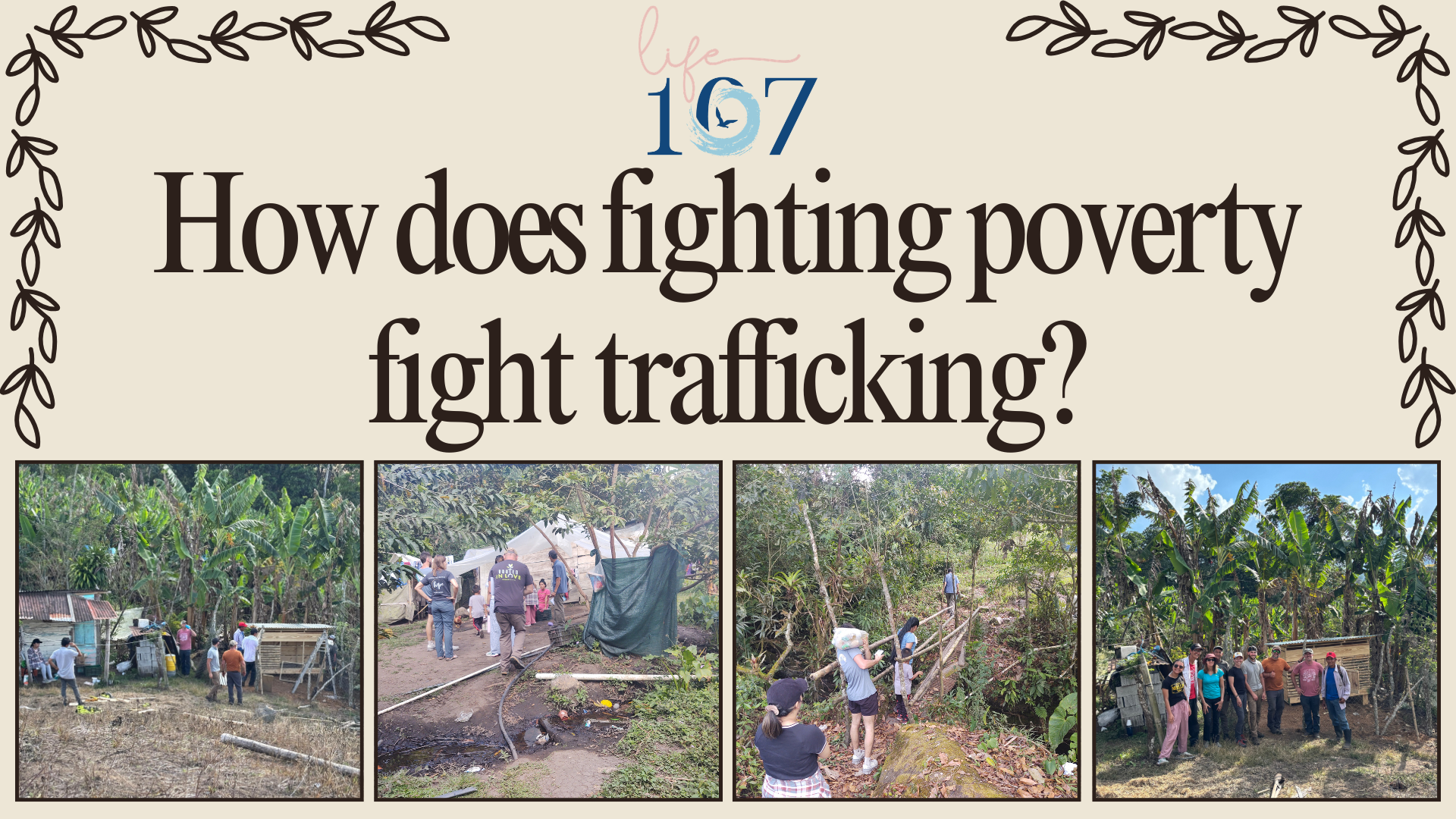
At Life 107, we are working globally to support women and children who are in impoverished situations so they can avoid trafficking. Recently, on our trip to Panama, we were able to meet the needs of women who were suffering from a lack of resources and offer training for teachers at under-resourced schools about preventing gender-based violence and trafficking to protect the next generations. We hope that we have helped protect women and children from trafficking and exploitation by serving these women in poverty and providing education and resources for impoverished schools. Small acts of love and service can make a huge impact. Locally, we lead training for churches and organizations on how to recognize the signs of trafficking, serve those experiencing homelessness without housing by providing resources to prevent them from engaging in survival sex, and provide restorative care to trafficking survivors to foster holistic healing and prevent relapse into exploitation. This issue of poverty creating susceptibility to sex trafficking is at the heart of our mission at Life 107.